Some Shack Upgrades

Lately I’ve been mostly operating on a few nets on 80 and 40 meters. Running 100w I often hear reports that my signal is pretty weak, so I thought maybe I should add an amplifier to my setup. The problem with that, was that my coax was less than ideal. It was mostly RG-58 and RG-8X running to the wire loop antenna. Fortunately, I had RG-8 running from the shack all the way to the tri-band beam. Also, my antenna tuner was only good for 200W.

So the first steps I took was to run all new RG-213 coax from the shack to the loop antenna. And I ordered an LDG-600ProII antenna tuner.

I also upgraded all the jumper coaxes in the shack to RG-213 and labeled each end with Dymo heat shrink tubing which really made hooking it all up a breeze and will help in the future if I need to disconnect anything.

Next I installed a dedicated 20A 120VAC circuit to power the amplifier. I debated about making it 240V but I already had 12-2 Romex and an extra 20A circuit breaker, and I knew I was going to be getting a kilowatt amplifier.

Now I just needed the amplifier.

About 6 months ago I had talked to a gentleman that had an Ameritron ALS-600S solid state amplifier for sale, at a price I liked. But I didn’t buy it. And I regretted it. So I thought, what the heck, shoot him an email, he might still have it. And he did! So I bought it, and he even delivered it right to my front door. What a deal!

So now I’m running 400-500 watts with about 50w of drive power. Nice!
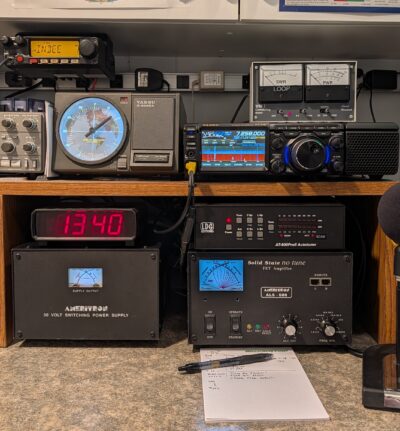
ALS-600S

Building a Wi-Fi NTP Clock

I had been wanting a nice digital UTC clock for my hamshack. In particular one that could set itself to an NTP server over the internet to maintain precise time. But I was having trouble finding a WiFi NTP clock at a price I was willing to pay. Most of the ones I was finding online were $200 or more. So what’s a ham to do? Build your own!

After a lot of searching for what I wanted, I ran across this project (see notes at end of post) over at Adafruit, and seemed like it just might fit the bill. And it did.

I used a Raspberry Pi Zero W as the brains, and the Adafruit 1.2″ 4-Digit 7-Segment Display w/I2C Backpack for the display. I followed the rest of the tutorial and it worked great.

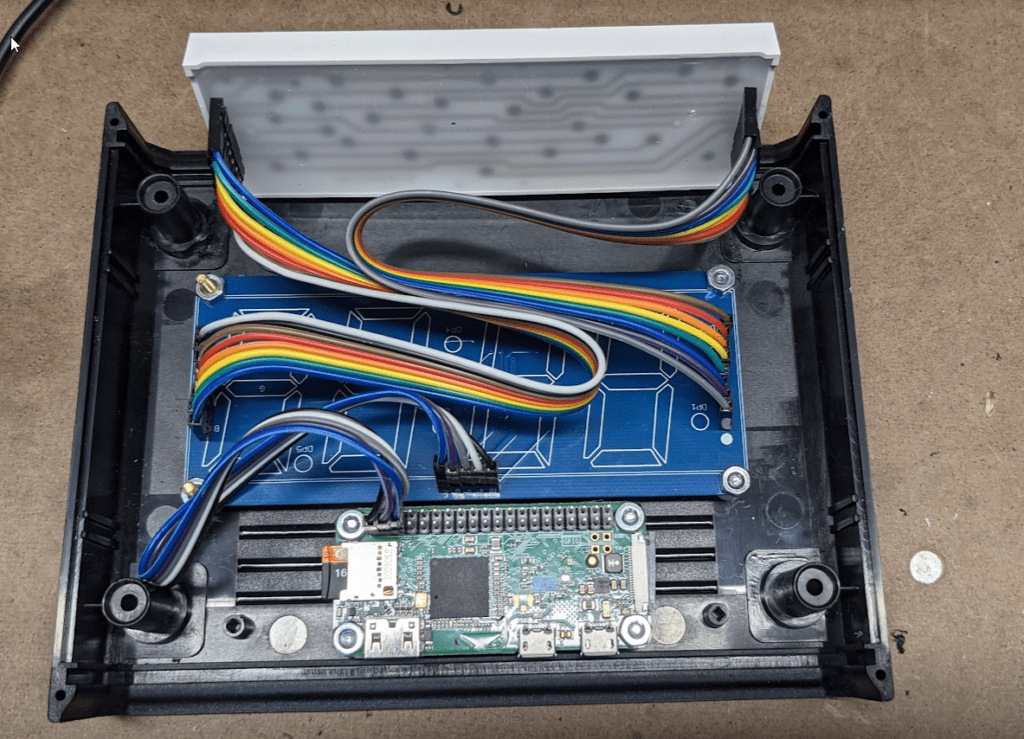
After trying it for some time I was happy with it, and found a Polycase enclosure that was almost the right size. At least for the 7-segment display itself. With it soldered to the backpack it was way too tall. So why not run it remotely from the backpack board? Using some jumper wires I did just that, and with only some minor Dremeling to the enclosure to make it fit perfectly.

Wifi NTP clock internal image

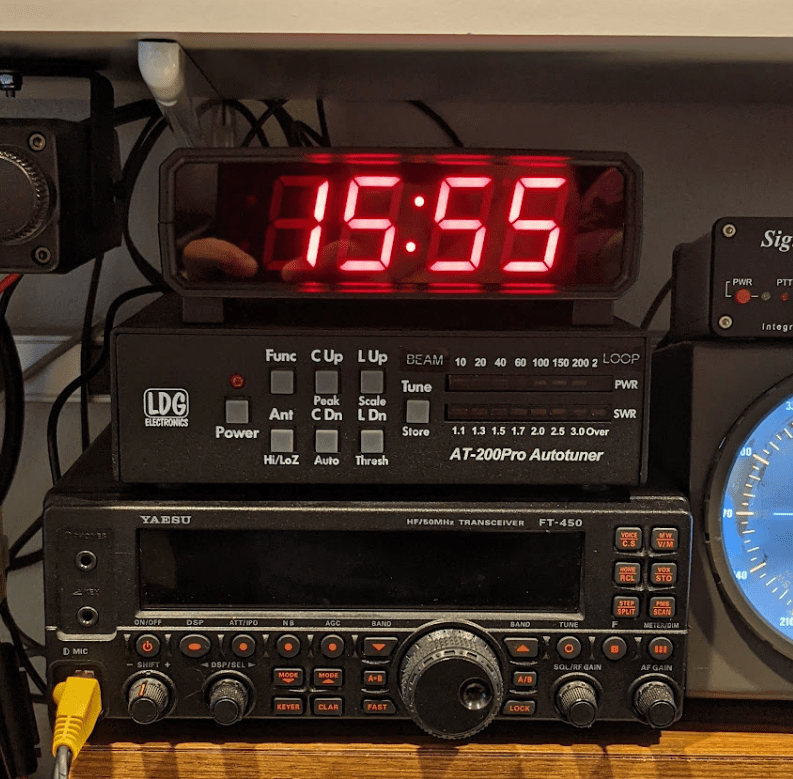
I used some red plexiglass on the front and it looks great in the shack. And it’s a bonus that the time is always correct. Just be sure that when you configure the Pi you set it to use UTC time.

Finished WiFi NTP Clock
The finished LED Wifi NTP Clock

All together I spent around $60 to build this clock.

NOTES:
Before pip3 command can be run, you need to do this:
sudo apt-get install python3-pip
You also need to run the pip3 commands as sudo.

It appears the github content for this project has gone 404, so you may have to create the python code files yourself.

You also will have to set the program to run as a service and should consider ways to extend the life of the SD card by reducing writes.

Yaesu G-800SA Rotor not turning when cold

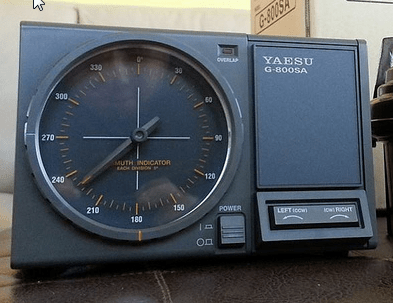
Yaesu G-800SA Rotor ControllerI’ve had a Yaesu G-800SA Rotor on my tower since I built it in 2009. I mostly like it, especially the nice big dial on the controller. The fact that it only needs 4 wires to operate is also a plus.
One thing I don’t like about this Yaesu Rotor is that it’s very cold blooded. I tend to take a bit of time off work over the holidays, so I like to mess around on the ham bands. Unfortunately, here in Iowa it’s often quite cold outside at this time of year. Today, for example, overnight we had a low of -4°F, and as of lunchtime it’s only reached 10°F.

It seems that when the temperature is cold, below about 10°F, the rotor stops turning. I haven’t yet been able to determine if this is a rotor issue, or some other problem related to my installation. I’m not very inclined to climb the tower when it’s cold out to see where the issue lies!

I’ve been pondering if there’s a way I could warm the rotor up a little bit, assuming I determine the issue is in the rotor. Or maybe it needs a different type of grease more suited to the cold Iowa winters.

In any case, while typing this post the rotor warmed sufficiently that I now turns. Time to check out the bands!

73

The Shack

hamshack1

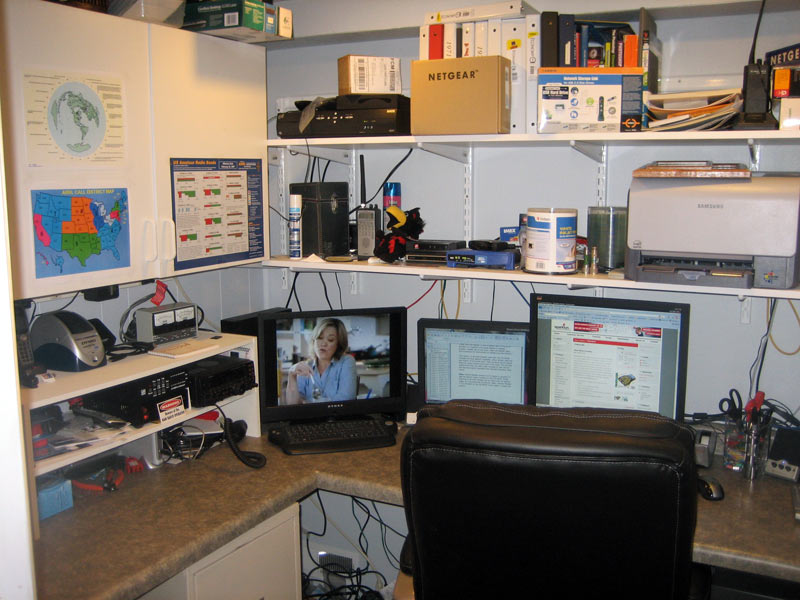
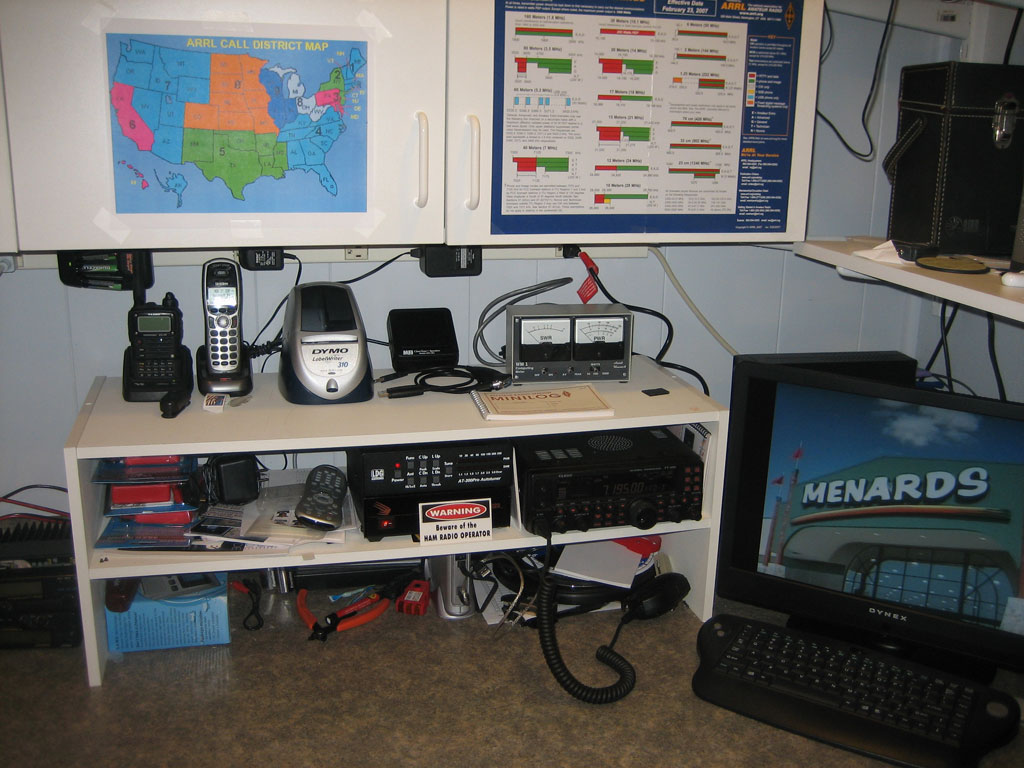
I just realized that there are no pictures of the shack on the site. The shack is very small.  We don’t have much usable space in the basement, so it was a challenge to set up an area for radios.  It was decided to carve out an area just over 6′ by 6′ in one corner. I built a couple of walls, installed a new ceiling, new carpet, and plenty of electrical.  I squeezed in kitchen countertops on two walls, installed some shelving, and utilized 5′ of wall cabinets that were already there. It’s not much space, but it seems to work out pretty well.

shack-clean

The biggest problem is keeping it clean.

My other “shack” is in my Blazer. There I have a Yaesu FT-7800 Dual Band, and a Radio Shack HTX-10 10m all-mode mobile.  Working 10m mobile is a lot of fun.